

While there are still challenges, there are opportunities for recovery
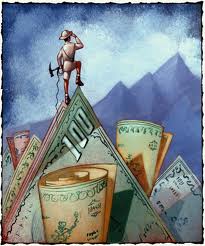 My Thoughts About This: The older I get, the shorter my time horizon gets for convincing others of my success as an investment advisor. If I thought I would need the money fifty years from now, there is little question how it should be invested. But if you and I are thinking two years from now, that takes a different mind set. Fortunately, I’ve found a process that adjusts almost daily to the vagaries of the markets and lets me worry less about short term volatility.
But there are still issues to resolve if you plan to retire in ten years. To get an idea about how this should be approached, click on the image to the left and watch a short video.
By Virginie Maisonneuve
Despite tough conditions, equity markets squeezed out decent gains in 2012. As we move into 2013, what can investors expect? The global economy faces significant challenges but we are positive on the outlook. Investors must, however, position themselves for a new kind of investment environment.
Markets Still Pricing in Bad News
The equity risk premium (ERP)—or the spread between the expected return on stocks over the risk-free rate—is close to multi-decade highs. The ERP has eased back in recent months as the eurozone sovereign debt crisis calmed, but it remains abnormally high. This suggests high risk-aversion, resulting in extreme valuations that should provide opportunities for long-term equity investors.
We advise caution when interpreting the risk premium: An elevated ERP only tells us that either equities are cheap or bonds are expensive. Still, the ERP is a useful indicator of relative valuation over time. Today, it tells us that equities are extremely cheap versus bonds.
Low interest rates have pushed the price of many government bonds to a point where returns to maturity are no longer attractive. The open-ended nature of the current round of central bank action will also support equities as investors will have to accept the current low level of yields as the new norm. Despite last year’s equity rises, markets are still pricing in substantial bad news. So while 2013 has challenges, small positive macro developments should translate into decent equity gains.
Innovation, Sustainability Will Drive Success
Although we are positive for 2013, we are unlikely to return to the boom years. As investors position themselves for recovery, they must realize that we are moving into an investment environment in which sustainability and innovation are key.
Previous decades of strong growth were predicated on high debt in the developed world and a resource-intensive model based on cheap commodities. This model is no longer viable. The past five years have shown that financing growth with high debt is unsustainable.
It is also unsustainable from a resources perspective. As we have touched on before in this column, the world’s resources are not infinite: We are already using planetary resources at 1.5 times the rate at which they regenerate.
Added to that, the global population is growing fast. It exceeded 7 billion in 2012 and by 2050 is forecasted to increase by another 2 billion. With the size and wealth of emerging market middle classes growing and climate change-related weather events disrupting supply, prices will continue to rise.
For investors, this need not be negative: Opportunities can be found, but it might require a change in mind-set.
Astute stock pickers will have a greater advantage given the need to understand how this low-growth world will impact companies. Companies that achieve an efficient use of resources and derive end demand from sustainable sources will benefit. Further, innovation will become an important differentiator as gaining the competitive edge becomes all the more rewarding.
 Helping Define Your Financial Future