

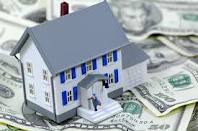
 My Comments: The world of real estate is something I don’t fully understand. The part I do understand is that home buyers play a large role in an economic recovery following a crash like the one we’ve been through recently.
Here is a commentary that suggests the reasons for home prices going up rapidly these days has very little to do with folks like you and I, or our children, buying a home to raise a family and eventually retire. The demand is there, but it’s not enough to push home prices up as fast as we’re seeing, so there has to be another reason for it.
This article tells us what that is and that what we are seeing is probably not sustainable. Which leads to the next expectation of a bubble that will burst and leave some folks on the short end of the stick. I’ve been wrong before, but you need to be sensitive to this as you or members of your family make plans to buy or build a new home.
By Peter Schiff, May 31, 2013
This week economists, investors and politicians were treated to some of the “best” home price data since the frothy days of 2006 when home loans were given out like cotton candy and condo flipping was a national pastime. The Case-Shiller 20 City Composite Home price index was up a startling 10.9% for the 12 month period ending in March. Prices in all 20 cities were up, with some (Las Vegas, Phoenix, and San Francisco) notching gains of more than 20%. Meanwhile the National Association of Realtors announced that April pending home sales volume reached the highest level in nearly three years.
The strong housing data is taken as proof that the economy has turned around and that a recovery is under way. Cooler heads may simply see how government policies have channeled money into real estate in order to reflate a bubble that has been collapsing for the last five years. Although the money is entering the market through slightly different paths than it did in 2005 and 2006, its effects on housing, and the broader economy, are the same as they were before the bubble burst. When the inevitable happens again, the ensuing damage will be eerily familiar.
After five years of dismal real estate performance and a lackluster economy, it’s hard to fault people for believing that rising home prices are a good barometer of economic health. There can be little doubt that rising home prices feel good. Even single digit appreciation can make modest home buyers feel like mini-moguls. The effect is magnified in a falling interest rate environment where any appreciation can be instantly turned into an opportunity for cash out refinancing. The “wealth effect” created by such activities then translates into consumer spending and other seemingly positive economic developments. But some things can taste great but be very harmful (cinnamon buns come to mind). It felt good when real estate prices were rising during the pre-financial crisis bubble, but that rise only exacerbated the problems when the bubble burst. The questions we should now be asking ourselves is why are prices rising, are those higher prices sustainable, and what are the costs to the broader economy?
The truth is that most buyers cannot afford today’s prices without the combination of government guarantees and artificially low mortgage rates. The Federal Reserve has been conducting an unprecedented experiment in economic manipulation. By holding interest rates near zero and by actively buying more than $40 billion monthly of mortgage-backed securities and $45 billion of Treasury bonds, the Fed has engineered the lowest mortgage rates in generations. At the same time, Federal control of the mortgage industry has become nearly complete, with government agencies Fannie Mae, Freddie Mac, and the FHA buying or guaranteeing virtually all new mortgages. In addition, a variety of Federal programs, such as the Home Affordable Modification Program (HAMP) are in place to help keep underwater homeowners in homes that they could not otherwise afford. Taken together, these programs create far more favorable terms for home buyers than those that existed before the crash.

 Helping Define Your Financial Future